
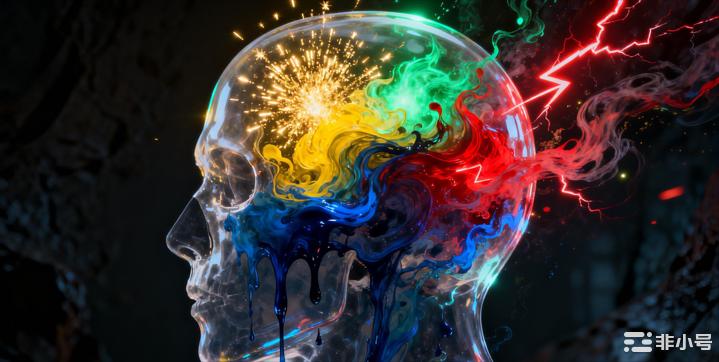
"People's emotions are used to influence others, not themselves." This seemingly cold statement actually hides profound human wisdom. It reminds us that emotions are not internal cages, but extroverted weapons; they are not self-disturbing poisons, but sharp tools for controlling situations. In interpersonal games, business negotiations, and even daily interactions, the art of mastering the "external expression" of emotions often determines success or failure.
First of all, emotions are the source of influence. Psychological research shows that 80% of human decision-making is driven by emotions rather than rationality. Anger inspires obedience, joy creates empathy, and sadness elicits sympathy. Think about the master at the negotiation table: he is not irritated by the opponent's roar, but responds calmly, secretly releasing a hint of disappointment - the opponent softens instantly and takes the initiative to make concessions. This is not disguise, but precise projection: your emotions are like flares, guiding others into your rhythm. On the other hand, if your emotions come back to bite you, you will become a living target on the battlefield: you will be incoherent when you are anxious, you will make hasty compromises when you are fearful, and you will eventually lose the initiative.
Second, emotional extraversion stems from evolutionary instincts. In ancient times, emotions were the glue for tribal cooperation: the leader's passion ignited fighting spirit, and the wise man's worry warned of crisis. Today, this evolves into social capital. In the workplace, moderate expressions of enthusiasm can bring the team closer; in love, subtle expressions of vulnerability can deepen bonds. But the key lies in "degree" and "direction": emotions must serve the goal, rather than pouring out like a flood. Those who indulge in self-pity are often dragged into the abyss by their emotions - they cannot control others, only themselves.
Of course, this is not to instigate "heartlessness". Really strong people are the masters of emotions: they are aware of inner fluctuations, but choose to express them externally. Buddhism says, "If the mind is not moved, then all things will not be moved." The modern version is: if emotions don't move oneself, they should move others first. The key to practice is mirror introspection: review an interaction every day and ask, "Who is affected by my emotions? How can I optimize it?" As it becomes a habit, you will find that the world is like a mirror, reflecting your calmness.
In short, emotions are not a burden, but a lever. Learn to let go rather than inward, and you will transform from a slave of emotions to a director of relationships. To control others, control emotions first - this is the true meaning of wisdom.