
On June 3, 2025, the electronic screen in the Wall Street trading hall was suddenly flooded with blood. Bitcoin price breaks out $ 110,000 mark, short position is at Within one hour, there was a collective liquidation, and $2.7 billion of funds poured in through Bitcoin spot ETFs, pushing the price to a historical peak. A Chicago Mercantile Exchange trader stared at the screen and muttered to himself: "This is not a carnival of retail investors, but a precise massacre launched by capital using ETFs as a new weapon."
1 Macroeconomic changes: Policies ignite the institutional ammunition arsenal
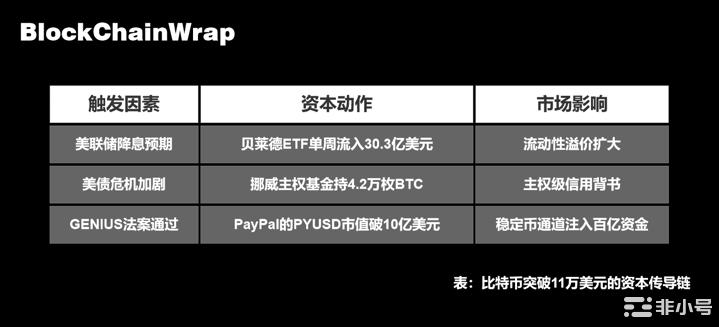
When the Federal Reserve’s interest rate cut signal resonated with the cooling of inflation, a capital siege targeting the crypto market quietly began. In May 2025, the U.S. core PCE inflation rate fell to 2.52%, a two-year low. At the same time, the Federal Reserve released expectations for an interest rate cut, and the US dollar liquidity floodgates are about to open. This signal was keenly captured by Wall Street - US$3.03 billion Single-week net inflow into BlackRock BitcoinETF set an annual record, and the Norwegian Sovereign Wealth Fund held 42,000 Bitcoins through hidden channels, worth more than $4.6 billion.
A deeper political conspiracy emerges. Trump Administration Appointments David Sacks, the veteran of the PayPal gang, is the White House cryptocurrency director. After taking office, he quickly promoted the implementation of the "GENIUS Stablecoin Act." The bill mandates that stablecoins be 100% anchored to U.S. debt, deeply tying the crypto market to the hegemony of the U.S. dollar. When the $36 trillion U.S. debt crisis is imminent, Bitcoin is given the strategic status of "digital gold" and becomes the new fulcrum of the U.S. dollar system.
2 Short stranglehold: ETFs become Wall Street’s new weapon
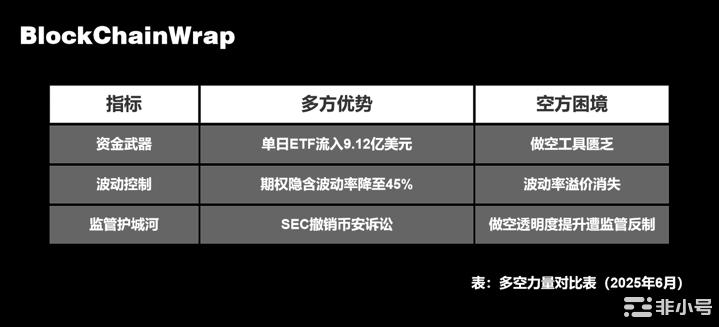
Traditional short-selling forces are in BitcoinThe siphon effect of ETFs has been retreating steadily. On June 3, $2.7 billion in ETF funds stabbed three key weak points like a scalpel:
2.1 Liquidity Trap: When short sellers tried to place an order at $105,000, BlackRock IBIT’s market maker immediately took all the sell orders, and the bid-ask spread was compressed to 0.01%
2.2 Volatility Taming: S&P 500 constituent funds include Bitcoin in their hedging portfolio to curb historically high volatility
2.3 Technical Breakthrough: Giant Whale Before Breakthrough Raid 18,000 BTC in 24 hours, forming a golden cross technical pattern
The panic and greed index staged a dramatic reversal: Surge from 39 (Fear) to 73 (Greed) in 48 hours. When 170,000 short accounts turned red one after another on the on-chain liquidation monitoring map, a total of US$572 million was reduced to ashes. A hedge fund manager who had shorted MicroStrategy smiled bitterly: "What we are fighting is not cryptocurrency, but the flood of US dollars through ETFs."
3 East-West showdown: The hidden line of the game between Asian retail investors and European and American institutions
In this capital feast, regional competition quietly emerges. Data shows Asian trading session contributed58% of the trading volume, but the capital flow shows a sharp contrast:
-Eastern Strategy: Chinese and Korean retail investors use Binance futures to open leverage up to 125 times, chasing the volatility dividends of Trump, MAGA and other meme coins
- Western Chess Game: BlackRock used ETF shares as collateral to sell put options on the Chicago Board Options Exchange to achieve "zero-cost positions"
This split reflects the structural changes in the market,And former believers in decentralization discovered, Active addresses on the Bitcoin chain dropped amid the surge 17% – ETFs are sucking the soul out of the spot market.
> There’s a new saying among Wall Street traders: “Buy code, not tokens, read quarterly reports, not white papers.”
4 Conspiracy emerges: Trump administration’s Bitcoin strategy
Political power and capital have completed a historic convergence at this moment. Controlled by the Trump family World Liberty Financial secretly absorbed 32,000 Bitcoins through the OTC market one week before the price breakthrough. At the same time, Trump shouted on social media: "Not a single Bitcoin can be sold!" - superficially calling for currency holdings, but actually squeezing liquidity.
A deeper national strategy emerges. When the United States only controls approx. 200,000 Bitcoins (accounting for 10% of the circulation), and millions of Bitcoins are urgently needed to reserve to control pricing power. The former White House economic adviser revealed that the internal strategy is divided into two steps:
- Short-term short squeeze: Use regulatory easing to attract rivals, and then use ETF channels to exterminate shorts
- Long-term hoarding: Force institutions to hold currency for a long time through tax law adjustments, with a target of controlling 30% of circulation
Such operations point directly to the crisis of US dollar hegemony. The US$35 trillion national debt increases by 1 trillion every 100 days. The petrodollar system was rebelled by Saudi Arabia, and gold reserves were shipped back by many countries. When the total market value of Bitcoin exceeds the 10% critical point of gold, it officially becomes the new anchor of the US dollar system.
5 Hidden thunder looms: the ecological fission behind the carnival
Under the capital feast, the cryptocurrency market is experiencing a genetic mutation. The total market value of stablecoins is higher than The peak in 2024 will drop by 37%, and the proportion of CEX altcoin trading volume will hit a three-year low. The previous "Copycat Season" transmission mechanism was completely broken - when BlackRock CEO Larry Fink called out a target price of US$700,000, the funds only stayed in the IBIT trust and no longer flowed to the Uniswap or Solana ecosystem.
The collapse of the security line is even more frightening. In May, hackers stole assets worth US$182 million. North Korean hackers used "wrench attacks" to torture high-net-worth currency holders, and robbed US$5.2 million in a single transaction. When Coinbase faced a $400 million claim for bribery and leakage of user data by customer service, the ideal of decentralization was vulnerable to centralized vulnerabilities.
06 End Game: Domesticated Bitcoin and the Lost Cryptospirit
Stand Looking back from the top of the mountain of $110,000, Satoshi Nakamoto’s white paper is turning yellow in the Wall Street vaults. When Bitcoin's 30-day volatility drops to the level of traditional technology stocks, and when ETF holdings exceed miners' reserves, a cruel fact has already emerged: the financial nature of Bitcoin is the absorption of traditional capital.
The crypto world once chanted "Banks are not trustworthy", now BlackRock is using US$55.38 billion in ETF management scale to build a new power center; blockchain flaunts "resistance to censorship", and now the GENIUS bill turns each stablecoin into a carrier of US debt. > Capital never sleeps, but freedom needs a breather. When the 2.7 billion ETF ammunition blasted open the 110,000-dollar door, the ghost of Satoshi Nakamoto whispered in the block reward: Is this a victory for Bitcoin, or is Wall Street’s ultimate embarrassment against the crypto uprising?