
1, BTC "Risk Aversion"Properties: Digital gold narrative and market truth
In April 2025, Bitcoin bucked the trend and exceeded US$95,000, but its departure from the traditional "safe haven asset" gold became increasingly significant
Correlation contradiction: Bitcoin-NASDAQ correlation rises to 0.5, correlation with gold dropped to -0.3
Intensified institutional control: BlackRock The total number of Bitcoin ETF holdings such as IBIT exceeded 1.1 million, accounting for 5.2% of the circulation, and the combined MicroStrategy positions accounted for 21% of the Bitcoin market value.8%, forming an "oligopoly pricing" pattern
Toolization of hedging labels: BlackRock CEO Larry Fink claims that Bitcoin is a "safe haven asset for global pessimism", but the essence is to attract sovereign fund allocations (such as 2%-5% asset ratio) and pave the way for ETF capital inflows
Liquidity siphon effect: Bitcoin A net inflow of US$1 billion into ETFs in a single week can push up prices by 7%-12%, while gold ETF funds outflowed US$2.3 billion during the same period, forming capital migration
2. Institutional Harvesting
Policy rumors and rumors: In March, Bitcoin rose by 9% in a single day due to the "Trump Crypto Reserve Plan", and then plummeted by 9% due to the tariff panic. Giant whales took the opportunity to sell high and buy low
Media cooperates with shipment: Released by JPMorgan Chase and other institutions After the “safe-haven assets” report, BlackRock’s IBIT holdings increased simultaneously, forming a closed loop of “research reports-funds-prices”
Fake order induction: Giant whale “Spoofy” placed a fake withdrawal order at $83,000, creating a technical breakthrough and triggering retail investors to follow suit with leverage
Volatility Harvesting: Institutions take advantage of implied volatility in options markets (IV) peak, selling straddle portfolio arbitrage, retail investors become the "fuel" of volatility premium
3. Market structure differentiation: institutions “Sweeping goods” and retail investors’ “liquidity trap”
Institutional currency hoarding strategy
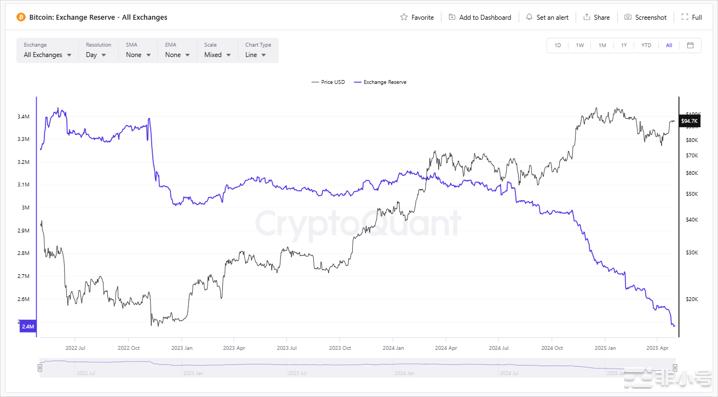
ETF siphon effect: In 2025, institutions purchased a total of 520,000 BTC through ETFs. Fidelity purchased US$253 million in a single transaction, and the exchange’s BTC reserves decreased by 500,000 year-on-year.
Anti-inflation narrative strengthens: Bitcoin annualized deflation rate 2.5% vs USD M2 growth rate of 4.8%, attracting sovereign funds to hedge the risk of currency depreciation
Retail investors’ dilemma: Altcoin collapse and leverage dependence
Altcoin liquidity dried up: The total market capitalization is higher than Peak shrinkage by 7 in 20218%
High leverage suicide rate: Retail investors’ leverage usage rate exceeds 80%, but only 3% can make stable profits, most of which become "nutrients" for exchange fees and liquidation
Four, Retail Investors Survival Guide: From FOMO to rational defense
Reserve Risk Index: lower than When 0.012 (currently 0.008), it implies that the confidence of long-term holders is strong
Coinbase Premium: When institutional buying intensity exceeds retail selling pressure, the premium turns positive and indicates a reboundUtilization of derivative instruments
Panic bargain hunting signal: When Bitcoin drops more than 1% in a single day 8%, when the panic and greed index is lower than 30, open positions in batches
Narrative countermeasures: Be alert Institutional interest motivations behind labels such as “safe haven assets” and “digital gold”, independently verify on-chain data
Bitcoin Breakout US$95,000 is not only a victory for the institutional narrative, but also the starting point of the retail investor’s cognitive revolution. When "safe haven assets" become tools for capital manipulation, only by penetrating the fog of labels, mastering the language on the chain, and building a hedging system can excess returns be captured under the scythe of institutions.