
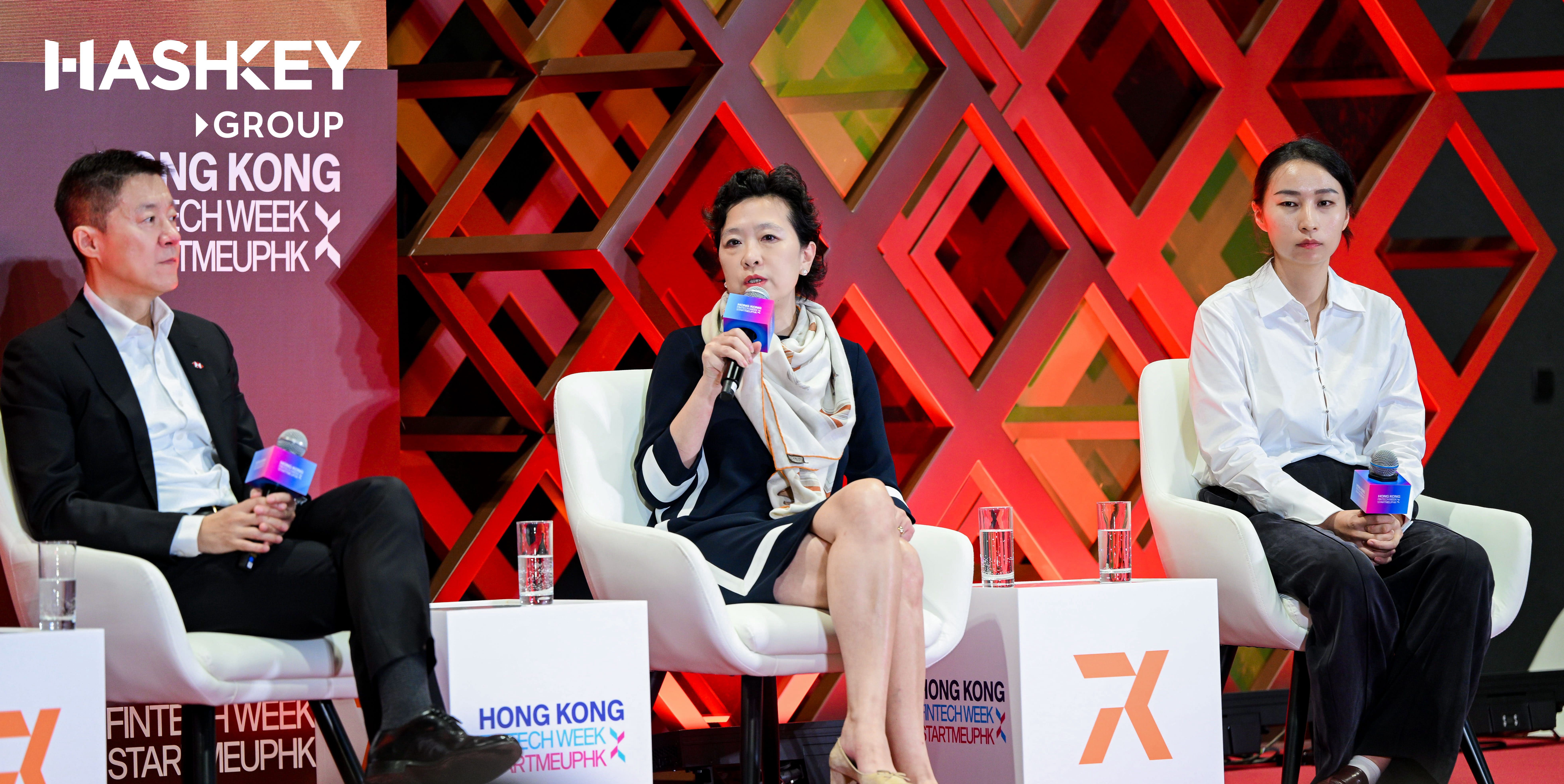
Rachel Qiu, Head of Business Development at HashKey Group and Chief Operating Officer of the On-Chain business group, today attended a panel discussion held during Hong Kong FinTech Week 2026, joining representatives from institutions including RedotPay, HSBC, RigSec and IG Group to discuss the development trends and commercial applications of stablecoins as financial infrastructure.
Rachel pointed out that stablecoins have become an important tool for on-chain settlement, but for on-chain finance to achieve scaled development, the key is to break through the bottleneck in liquidity supply and build financial infrastructure capable of supporting the circulation of diverse assets and forms of capital. As financial assets such as tokenized deposits, money market funds and U.S. Treasuries are gradually brought on-chain, the sources of on-chain liquidity will become more diversified, helping to form a more resilient and sustainable on-chain financial ecosystem.
On practical applications, Rachel used cross-border trade as an example to introduce HashKey On-Chain's exploration of tokenizing trade assets. Traditional cross-border trade settlement cycles are relatively long, and corporate funds are often tied up while goods are in transit. HashKey is working with shipping companies, exporters and importers to explore tokenizing trade assets such as bills of lading, invoices and accounts receivable, so that while improving cross-border settlement efficiency, the related assets can also serve as financing collateral, helping companies unlock the value of their trade assets, obtain working capital and improve capital turnover efficiency.
Rachel emphasized that HashKey On-Chain's development direction is to build financial infrastructure capable of carrying stablecoins, tokenized deposits and other forms of on-chain liquidity. As traditional finance and on-chain finance further converge, the industry also needs to establish risk management, asset protection and emergency response mechanisms that match technological developments, bringing traditional finance's mature experience in cybersecurity, fraud detection and customer protection into the on-chain financial system, laying the foundation for institutions and enterprises to adopt on-chain financial services at scale.