
Top Court Clash Marks Start of Poland’s Brutal Election Campaign
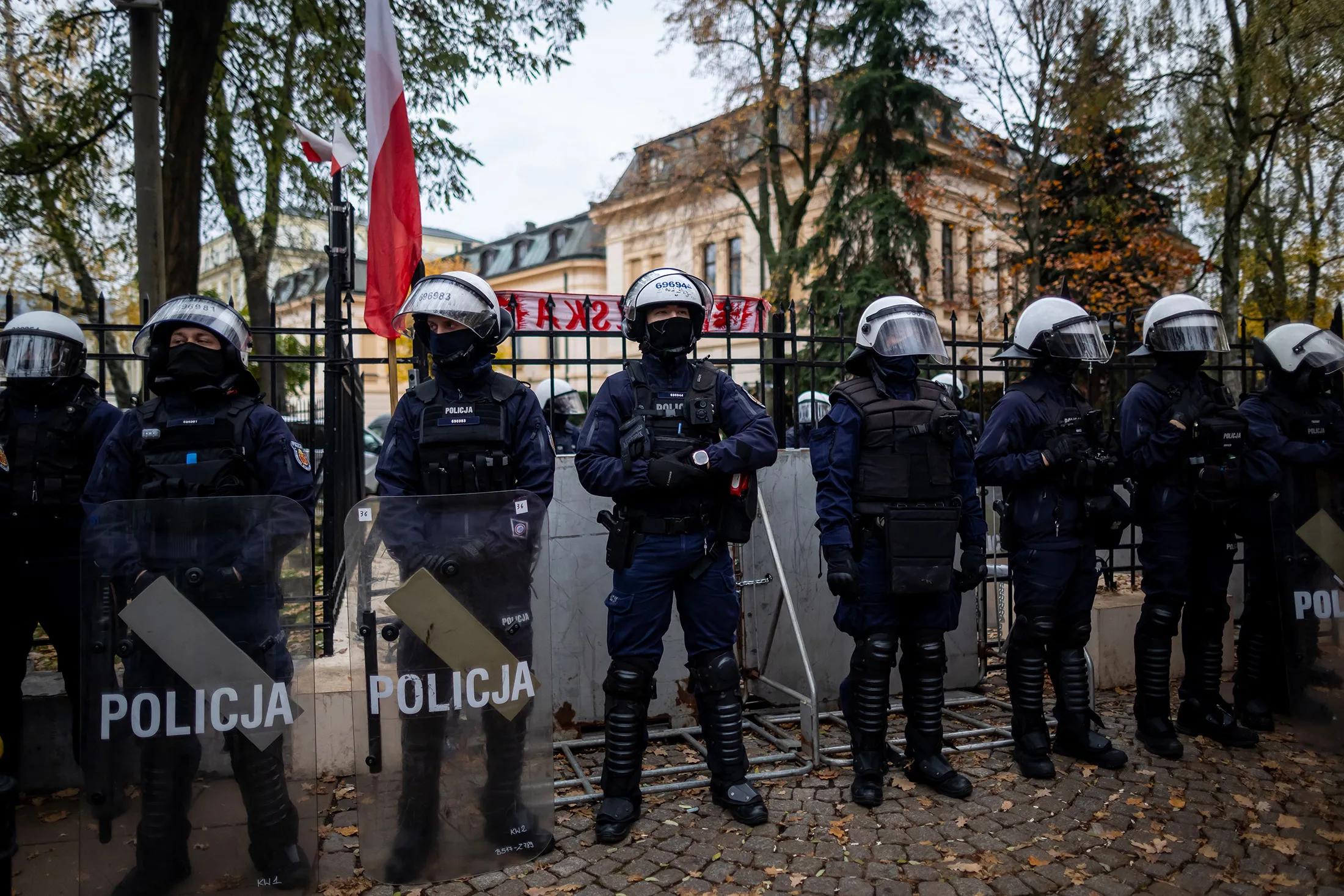
Riot police officers stand guard during a protest outside the headquarters of Poland’s Constitutional Court in Warsaw on Nov. 1. Photographer: Wojtek Radwanski/AFP/Getty Images
By Piotr Skolimowski November 02, 2026 at 05:15 AM GMT+8
Donald Tusk, Poland’s prime minister, once told a group of prominent lawyers that his government will need to embrace a militant-style democracy to restore the rule of law after eight years of nationalist rule.
A year before a parliamentary election, he is putting the idea into action.
An unprecedented decision on Friday to deploy riot police to secure the constitutional court and suspend Chief Justice Bogdan Swieczkowski as well as his deputy, both nominees of the former ruling Law and Justice party, has plunged Poland into a political crisis.
It also underscores a growing sense of urgency to deliver on the pledges that brought Tusk into power in 2023, especially as big chunks of his legislative agenda has been stymied by opposition-backed President Karol Nawrocki. Faced with another vote in the fall of next year and rising support for the far right, the premier signaled he lost his patience.
“We have waited too long to be intimidated and to back down now,” Tusk told the nation in an evening address on Saturday, vowing to press on with the tribunal’s overhaul. “In certain matters there can be no compromise.”
Central bank Governor Adam Glapinski may become the next target of the crackdown after a parliamentary inquiry concluded that he was doing favors for previous right-wing administration ahead of last general election. Glapinski has denied any wrongdoing.
Poland’s Tusk Says He Won’t Back Down in Top Court Standoff
Polish Opposition Leader Raises Threat of Talks to Leave the EU
Poland’s Political Feud Risks Derailing Its Decade of Growth
An attempt to suspend the central bank governor from office, which lawmakers are expected to vote on as early as this month, could only escalate the situation. Glapinski signaled he’s not going to respect the outcome, citing a top court verdict that rules out his suspension under parliament’s current rules.
Major Gamble
The battle over Poland’s top court has pitted the former European Council president against the nationalist opposition, which stacked the tribunal with political appointees during its eight years in power. The European Union’s top court ruled in 2021 that the tribunal wasn’t independent and impartial in its rulings.
The European Commission, the EU’s executive arm, has sided with the government, saying through its spokesperson on Saturday that it was up to parliament to appoint new judges to the court, something that Nawrocki sought to stall, citing alleged flaws in the selection process and laying the groundwork for the clash with Tusk.
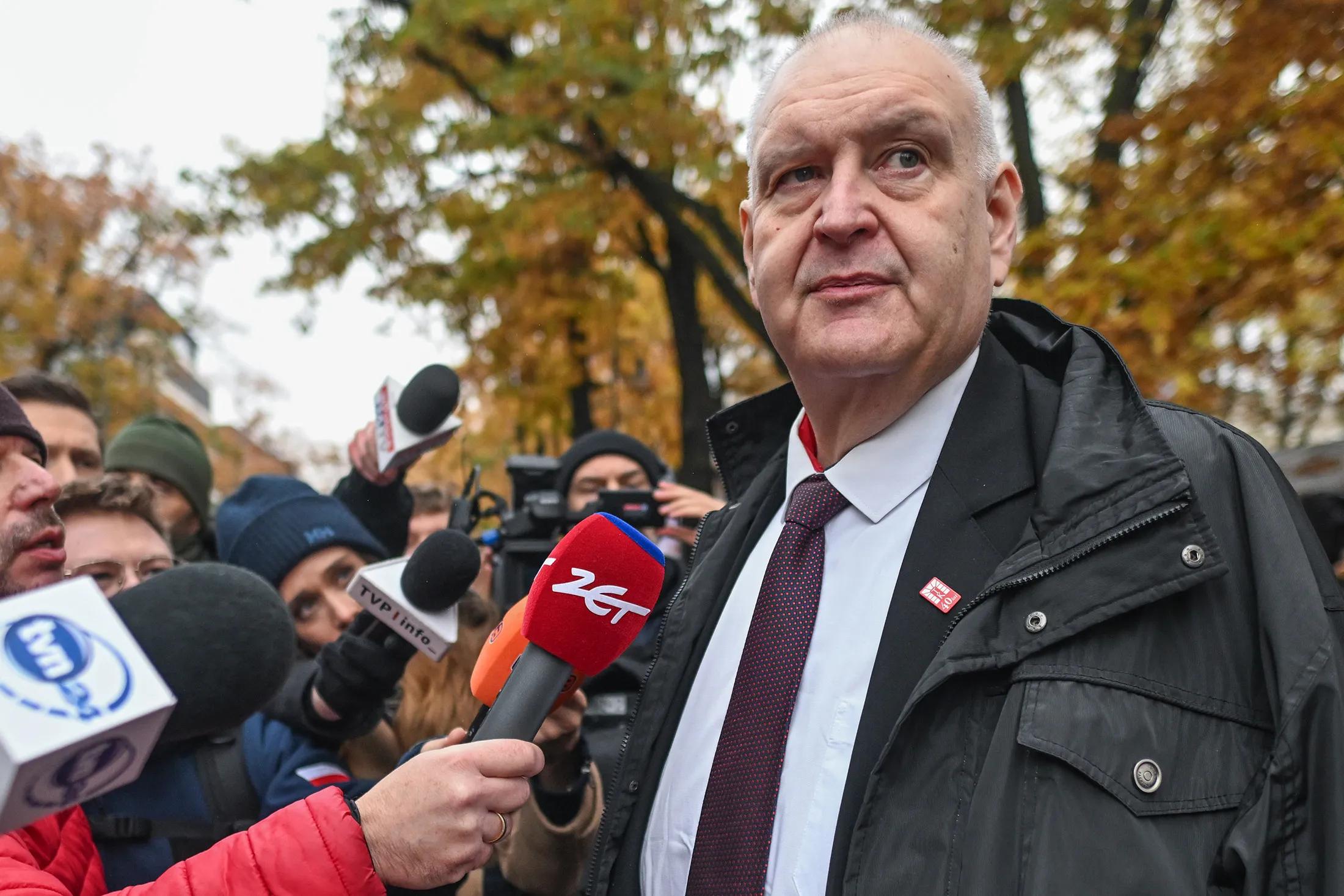
How the conflict shakes out will matter for the rest of the EU as countries including Spain and France are facing general elections in the coming months with far-right parties gaining strength. Tusk has sought to keep Poland in the bloc’s mainstream as the fast-growing economy put it on the cusp of becoming one of the 20 biggest in the world.
But as the spat turns into an all-out confrontation, Tusk is also taking a major gamble. Poland is set to run one of the EU’s widest budget deficits of around 7% of gross domestic product this year. The zloty currency is also trading near the weakest level against the euro since late 2023.
Moody’s in September downgraded the country’s credit rating for the first time in a decade, citing a standoff between the government and the president, a former boxer backed by US President Donald Trump. S&P is scheduled to review Poland’s rating on Friday.
Paralyzed Tribunal
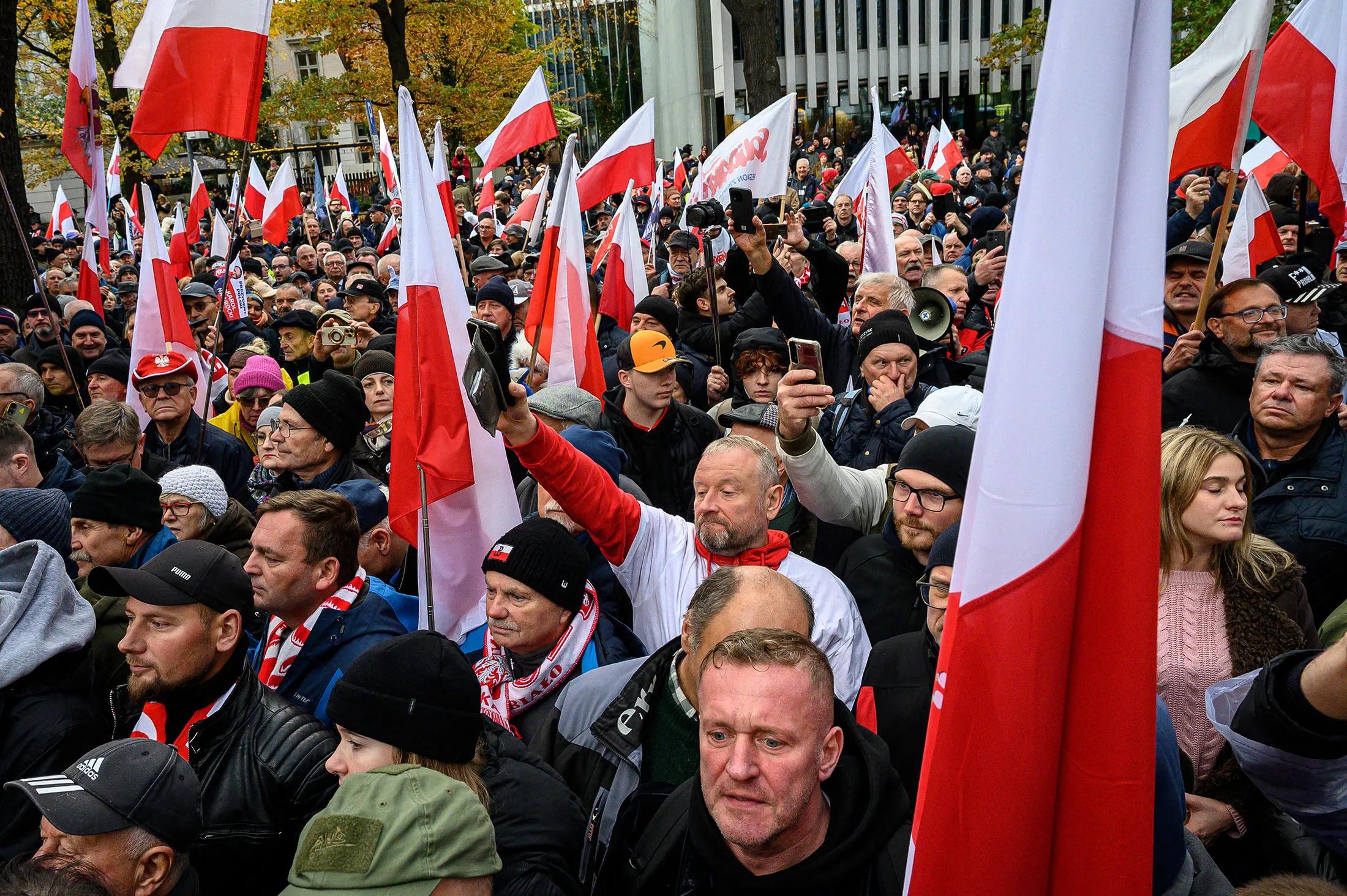
The feud over the tribunal has sparked protests. Over the weekend, police detained four people including three who attempted to enter the court’s premises over the fence. Footage published on social media showed the president trying to force his way into the building after midnight on Saturday, past a group of Constitutional Tribunal justices who tried to bar his entry. Tusk said the judges were attacked.
The top court has long been paralyzed by disputes. While parliament has filled vacancies for most of the judges, a number haven’t been recognized by the chief justice. Furthermore, the president has refused to accept their oaths of office, a ceremonial step which the head of state says prevents them from being lawfully appointed to the tribunal.
While Tusk isn’t willing to back down, it’s unclear whether all of his allies in the four-way coalition are holding firm. The leaders of two parties — the Polish Peasants Party and Poland 2050 — attended consultations that Nawrocki called on Saturday. Tusk’s Civic Platform and the Left boycotted the talks.
Polish Peasants leader and Defense Minister Wladyslaw Kosiniak Kamysz said the the country needed “a constitutional reset,” which he described as “the only chance to gradually restore normalcy around the Constitutional Tribunal,” according to his post on X.
Nawrocki’s chief foreign policy aide, Marcin Przydacz said that while Tusk wasn’t ready for dialogue, “there are voices coming from his coalition that understand the gravity of the situation.”
“It’s clear that his coalition isn’t a monolith on this matter,” Przydacz told Bloomberg.